Piano chords and scales
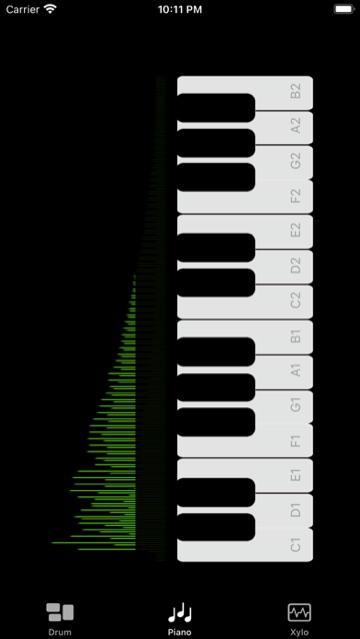
Choose a root and a chord or a scale. The matching keys light up, the spelling and the intervals are written out, and you can play the notes together or one by one.
- Lit on the keyboard
- Free, no sign-up
Runs in your browser. Nothing you type or open is uploaded. Free to use, no account. More audio tools

How to use it
- Choose A chord or A scale, then the root and the type.
- For a chord, pick an inversion. The lit keys and the note list update together.
- Press Play together or Play one by one. You can also tap any key.
Chords, inversions and scales
A chord is spelled in thirds from the root, so C major is C E G and C7 is C E G B♭. Root position puts the root at the bottom. Each inversion takes the next chord tone as the bass and lifts the notes that fell below it, which is how a close-position voicing stays in one reach of the hand. The keyboard lights every octave of those pitch classes, and Play uses one close voicing from middle C.
Scales use the same spelling. Major steps are whole, whole, half, whole, whole, whole, half. Natural minor lowers the 3rd, 6th and 7th. Harmonic minor raises the 7th again, and melodic minor, in the ascending form used here, also raises the 6th. Pentatonic, blues and the modes are in the scale list. When another root spells the same notes with fewer accidentals, the page offers that spelling. Tap a key to hear that note on its own.
Private by design
Privacy
Everything runs in this page and stays on your device. The keyboard and the tones are made in this page.
This page also shows Google ads, which can use cookies. Privacy and cookies explains how.
Questions
How do I see a chord on the piano?
Choose A chord, a root and a type. The chord tones light up, and the line under the keyboard spells them with their intervals. Play together sounds the close voicing.
What is an inversion?
Root position has the root in the bass. The 1st inversion puts the 3rd in the bass, the 2nd inversion puts the 5th there, and later inversions follow the next chord tones. The note list shows which tone moved.
Which scales are included?
Major, natural minor, harmonic minor, ascending melodic minor, major and minor pentatonic, blues, major blues, and the modes from Dorian through Locrian.
Why are some keys lit in more than one octave?
The light shows every key of that pitch, so a C major lights every C, E and G on the keyboard. The played voicing is the one written in the note list.
Can I hear the notes separately?
Yes. Play one by one plays a chord as an arpeggio and a scale upwards. Tap any key to hear that single note.

From the same developer
- Drums n Piano: the matching app.